Understanding Crypto Gas Fees Across Different Blockchains
Key Takeaways
- Gas fees compensate validators for processing your transactions on the blockchain
- Ethereum mainnet is expensive ($5-100+); Layer 2s offer the same security for ~$0.10-0.50
- Solana, TON, and TRON have near-zero fees but different trade-offs
- Fees vary based on network congestion—timing matters
- Keyra helps you choose the cheapest network for your transaction
Introduction
Nothing kills the excitement of crypto faster than seeing a $50 fee on a $100 transaction. Gas fees are the hidden cost of blockchain—and they vary wildly.
The good news? Understanding gas lets you save hundreds or thousands of dollars by choosing the right networks and timing. This guide breaks down gas fees across every major chain so you can transact smarter.
What Are Gas Fees?
Gas fees are payments to network validators (or miners) for:
- Processing your transaction
- Including it in a block
- Storing the data on the blockchain
Think of it like stamps for the blockchain postal service. More complex “packages” (transactions) need more “stamps” (gas).
Calculating Gas Fees
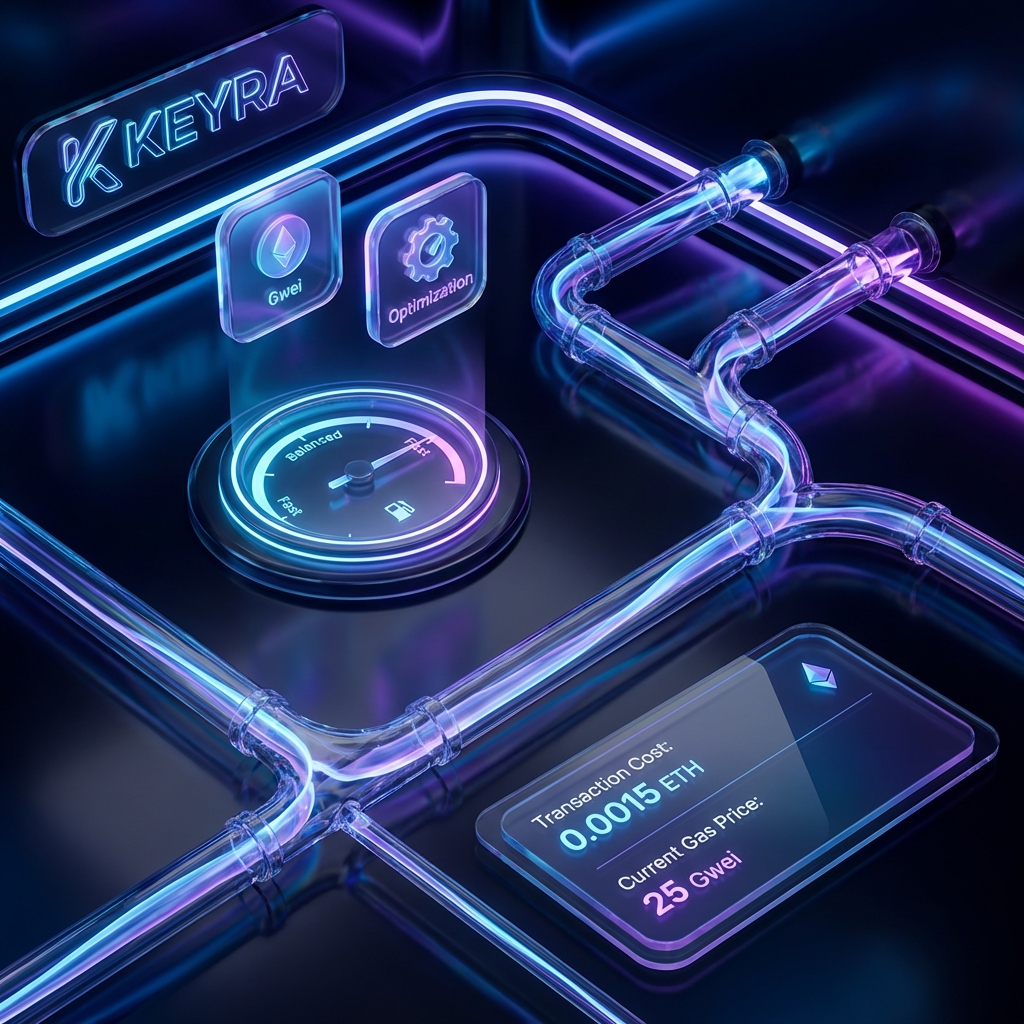
The formula is simple: Gas Limit × Gas Price = Transaction Fee.
- Gas Limit: The amount of computational work (e.g., 21,000 for a transfer).
- Gas Price: The cost per unit of work (measured in Gwei).
⛽ Gas Fee Estimator
Real-World Examples
On other networks, the calculation differs but the concept is similar.
Gas Fees by Network: The Complete Guide
Ethereum Mainnet
The original smart contract blockchain—and often the most expensive.
| Transaction Type | Typical Cost |
|---|---|
| Simple ETH transfer | $1-10 |
| ERC-20 token transfer | $3-15 |
| Uniswap swap | $10-50 |
| NFT mint | $20-100+ |
| Complex DeFi | $50-200+ |
Why so expensive?
- High demand for limited block space
- Security comes from decentralization (many validators)
- EIP-1559 burns a portion of fees, reducing supply
When to use: High-value transactions, critical security needs, NFT blue chips.
Layer 2: Arbitrum & Optimism
Same Ethereum security at a fraction of the cost.
| Transaction Type | Typical Cost |
|---|---|
| ETH transfer | $0.05-0.20 |
| Token transfer | $0.10-0.30 |
| Swap | $0.20-0.80 |
| Complex DeFi | $0.50-2.00 |
How they work:
- Bundle many transactions together
- Submit proofs to Ethereum for finality
- Inherit Ethereum’s security guarantees
When to use: Daily transactions, DeFi, most activities.
Layer 2: Base
Coinbase’s L2—optimized for low fees and easy onboarding.
| Transaction Type | Typical Cost |
|---|---|
| ETH transfer | $0.01-0.10 |
| Token transfer | $0.02-0.15 |
| Swap | $0.10-0.50 |
When to use: Beginners, Coinbase users, low-fee trading.
Solana
High-speed blockchain with near-zero fees.
| Transaction Type | Typical Cost |
|---|---|
| SOL transfer | ~$0.0001 |
| Token transfer | ~$0.0002 |
| Swap | ~$0.001 |
| NFT mint | ~$0.01 |
Trade-offs:
- Faster but historically less stable (network outages)
- Different programming model (not EVM compatible)
- Growing ecosystem but smaller than Ethereum
When to use: High-frequency trading, NFT minting, Solana DeFi.
TON (The Open Network)
Telegram’s blockchain with minimal fees.
| Transaction Type | Typical Cost |
|---|---|
| TON transfer | ~$0.005 |
| Jetton transfer | ~$0.01 |
| Swap | ~$0.02-0.05 |
When to use: Telegram ecosystem, TON DeFi, micropayments.
TRON
Popular for stablecoin transfers, especially USDT.
| Transaction Type | Typical Cost |
|---|---|
| TRX transfer | Free (with bandwidth) |
| USDT transfer | ~$0.5-2 (or free with energy) |
The bandwidth/energy model:
- Staking TRX gives you free transaction allocation
- Complex but can result in near-zero fees
- Widely used for USDT transfers in Asia
When to use: USDT transfers, low-cost remittances.
Bitcoin
The original blockchain—simple but not cheap.
| Transaction Type | Typical Cost |
|---|---|
| Simple transfer | $0.50-5 (low priority) |
| Simple transfer | $5-20 (high priority) |
How Bitcoin fees work:
- Fee = Transaction size (bytes) × Fee rate (sats/vbyte)
- No smart contracts, so complexity is limited
- Congestion during bull markets can spike fees
When to use: Store of value, large transfers, long-term holdings.
Polygon
Ethereum sidechain with minimal fees.
| Transaction Type | Typical Cost |
|---|---|
| MATIC transfer | <$0.001 |
| Token transfer | <$0.005 |
| Swap | ~$0.01-0.05 |
Trade-off:
- Different security model than true L2s
- Relies on its own validator set
- Still inherits Ethereum ecosystem compatibility
When to use: Gaming, NFTs, low-stakes DeFi, learning.
Complete Fee Comparison Table
| Network | Simple Transfer | Token Swap | Security Model |
|---|---|---|---|
| Ethereum | $1-10 | $10-50 | Most decentralized |
| Arbitrum | $0.05-0.20 | $0.20-0.80 | Ethereum-secured |
| Optimism | $0.05-0.20 | $0.20-0.80 | Ethereum-secured |
| Base | $0.01-0.10 | $0.10-0.50 | Ethereum-secured |
| Polygon | <$0.01 | $0.01-0.05 | Sidechain |
| Solana | ~$0.0001 | ~$0.001 | Independent |
| TON | ~$0.005 | ~$0.02 | Independent |
| TRON | ~Free | ~$0.5-2 | Independent |
| Bitcoin | $0.50-20 | N/A | Most decentralized |
Strategies to Minimize Gas Fees
1. Choose the Right Network
Ask yourself:
- Does this transaction need Ethereum mainnet security?
- Can I bridge to a cheaper L2 first?
- Is the recipient on a cheaper network?
2. Time Your Transactions
Gas prices fluctuate based on network demand:
| Time | Typical Congestion |
|---|---|
| Weekends | Lower |
| US nights (Asian mornings) | Lower |
| NFT drops | Very high |
| Market volatility | Higher |
Use tools like Etherscan Gas Tracker to check current prices.
3. Batch Transactions
If you need multiple operations:
- Use protocols that batch (e.g., aggregators)
- Wait and do multiple swaps at once
- Use smart contract wallets with batch transactions
4. Set Custom Gas Limits
Most wallets let you adjust gas price:
- Low: Might take hours, risk of failure
- Standard: Minutes, reliable
- Fast: Seconds, costs more
For non-urgent transactions, “low” can save 30-50%.
5. Use Gas Abstraction
Emerging solutions let you pay gas in any token:
- Paymasters sponsor your transactions
- Pay with USDC instead of ETH
- Keyra is adding gas abstraction features
How Keyra Helps You Save
Keyra is designed to minimize your gas costs:
- Network suggestions: We recommend the cheapest network for your transaction
- Gas estimation: See fees before committing
- Transaction simulation: Know exactly what you’ll pay
- Multi-chain support: Easily switch to cheaper networks
- Coming soon: Gas abstraction and sponsored transactions
Frequently Asked Questions
Why did my transaction fail but I still lost gas?
What's the cheapest way to move USDC between chains?
Are Layer 2 fees stable or do they fluctuate?
Ready to Secure Your Future?
Join thousands of users who trust Keyra for their multi-chain self-custody.
Download Keyra Now