DeFi for Beginners: Your First Steps into Decentralized Finance
Key Takeaways
- DeFi (Decentralized Finance) recreates traditional finance using blockchain—no banks required
- Smart contracts automatically execute financial operations when conditions are met
- Self-custody is essential: you control your keys and your funds
- Start with small amounts to learn before committing significant funds
- Always verify contracts and understand risks before interacting with DeFi protocols
Introduction
Imagine a world where you can earn interest on your savings, take out loans, or trade assets—all without a bank, broker, or middleman. That’s DeFi, or Decentralized Finance.
Built on blockchain technology, DeFi has grown from a niche experiment to a multi-billion dollar ecosystem. And unlike traditional finance, it’s open to anyone with an internet connection.
This guide will take you from zero to your first DeFi interaction, safely and confidently.
What Is DeFi?
DeFi stands for Decentralized Finance—a collection of financial applications built on blockchain networks (primarily Ethereum and its Layer 2s).
DeFi vs Traditional Finance
| Aspect | Traditional Finance | DeFi |
|---|---|---|
| Access | Bank account required | Anyone with internet |
| Hours | Business hours | 24/7/365 |
| Custody | Bank holds your money | You hold your money |
| Transparency | Opaque | Open-source, auditable |
| Speed | Days for settlements | Minutes or seconds |
| Innovation | Slow, regulated | Fast, permissionless |
What Makes DeFi Work?
The magic behind DeFi is smart contracts—self-executing programs on the blockchain that automatically perform actions when conditions are met.
Example of a simple smart contract logic:
IF user deposits 1 ETH
AND user wants to borrow USDC
AND collateral ratio is above 150%
THEN automatically send 1,500 USDC to user
AND hold 1 ETH as collateral
No human approval needed. No waiting. The code executes exactly as written.
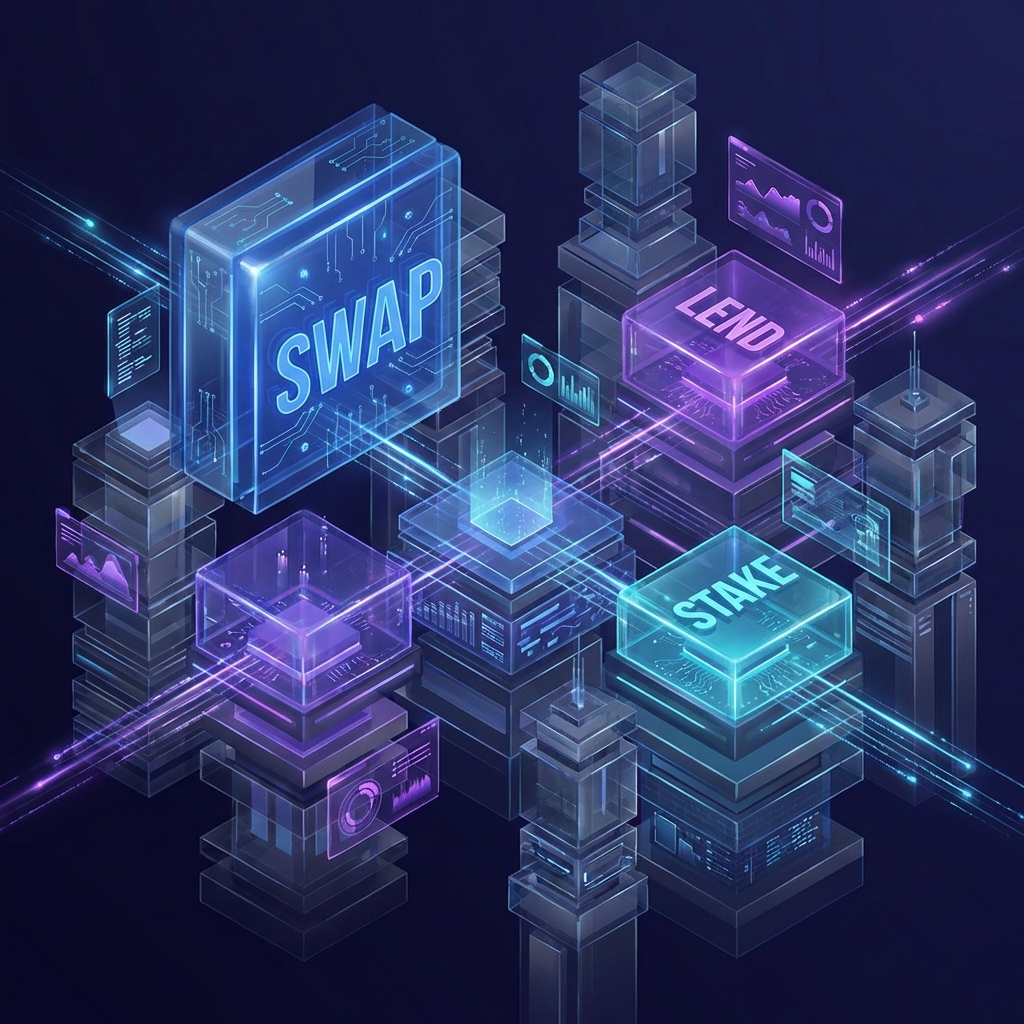
Core DeFi Applications
1. Decentralized Exchanges (DEXs)
Trade cryptocurrencies directly from your wallet without an intermediary.
Popular DEXs:
- Uniswap (Ethereum, L2s)
- Curve (Stablecoin trading)
- Jupiter (Solana)
- Raydium (Solana)
How it works:
- Instead of order books, DEXs use liquidity pools
- Prices are determined algorithmically (AMMs)
- You always trade against the pool, not another person
2. Lending & Borrowing
Earn interest by lending your crypto, or borrow against your holdings.
Popular protocols:
- Aave
- Compound
- MakerDAO
How it works:
- Deposit crypto → Earn interest
- Deposit collateral → Borrow other tokens
- If collateral drops too low → Liquidation
3. Staking
Lock up your tokens to help secure a network and earn rewards.
Types of staking:
- Native staking (ETH on Ethereum)
- Liquid staking (Lido, Rocket Pool)
- LP staking (Liquidity provider rewards)
4. Yield Farming
Maximize returns by moving funds between protocols.
Warning: Higher yields often mean higher risks. “10,000% APY” is a red flag.
5. Stablecoins
Cryptocurrencies pegged to stable assets like the US dollar.
| Stablecoin | Type | Backing |
|---|---|---|
| USDC | Centralized | Bank reserves |
| USDT | Centralized | Various reserves |
| DAI | Decentralized | Crypto collateral |
| FRAX | Hybrid | Partial collateral |
Getting Started: Your First DeFi Steps
Step 1: Set Up a Non-Custodial Wallet
You need a wallet where you control the keys. Keyra is perfect for beginners:
- Download Keyra from App Store or Google Play
- Create a new wallet
- Back up your seed phrase securely (metal backup recommended)
- Never share your seed phrase with anyone
Step 2: Get Some Crypto
You’ll need crypto to interact with DeFi. Options:
- Buy in Keyra using fiat on-ramps
- Transfer from exchange (Coinbase, Kraken, etc.)
- Receive from friend via your wallet address
Starting suggestion: $50-100 worth of ETH on Arbitrum (lower fees than mainnet).
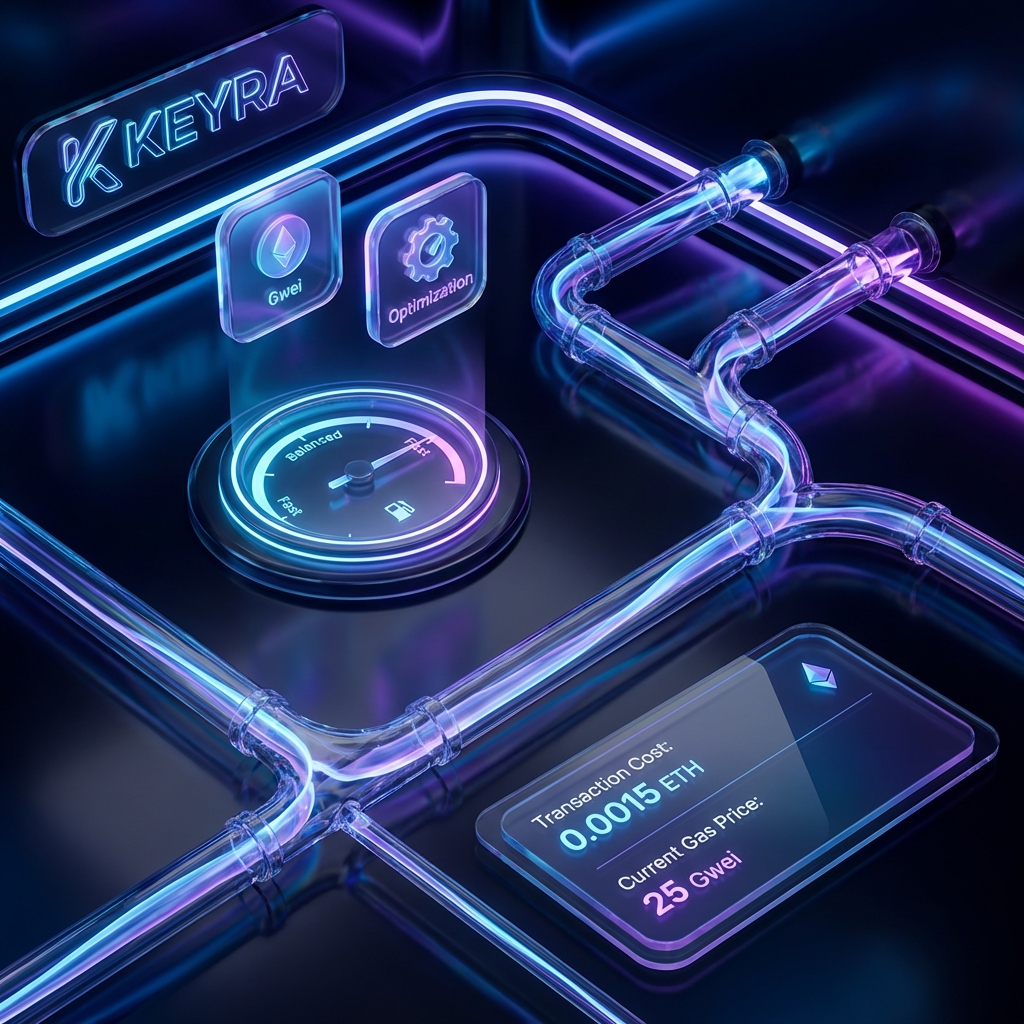
Step 3: Understand Gas Fees
Every blockchain transaction costs a fee (“gas”):
| Network | Typical Swap Fee |
|---|---|
| Ethereum mainnet | $5-50+ |
| Arbitrum | $0.10-0.50 |
| Optimism | $0.10-0.50 |
| Polygon | <$0.01 |
| Solana | <$0.01 |
Pro tip: Start on Layer 2 networks (Arbitrum, Base) for cheaper learning.
Step 4: Make Your First Swap
Let’s do a simple token swap on a DEX:
- Open a DEX (Uniswap, etc.) in your browser or Keyra’s dApp browser
- Connect your wallet
- Select tokens to swap (e.g., ETH → USDC)
- Review the transaction details
- Use transaction simulation to preview outcome
- Confirm and sign
Congratulations—you’ve just used DeFi! 🎉
Step 5: Explore Gradually
Don’t rush into complex strategies. Progress slowly:
- Week 1-2: Simple swaps, understand gas
- Week 3-4: Small deposit into lending protocol
- Month 2: Try staking or liquidity providing
- Later: Advanced strategies (only with experience)
Understanding the Risks
DeFi is powerful but not without risks. Be aware:
Smart Contract Risk
- Bugs in code can be exploited
- Look for audited protocols from reputable firms
- Check TVL (Total Value Locked) as a signal of trust
- Avoid “new and unaudited” protocols with your main funds
Impermanent Loss
When providing liquidity, price changes can reduce your holdings compared to just holding:
You deposit: 1 ETH + 1,500 USDC
Price doubles: You now have ~0.7 ETH + 2,100 USDC
If you'd just held: 1 ETH + 1,500 USDC would be worth more
Liquidation Risk
Borrowed positions can be liquidated if collateral value drops:
- Always maintain healthy collateral ratios (200%+ is safer)
- Set up alerts for collateral health
- Don’t max out borrowing capacity
Scams and Phishing
- Never share your seed phrase
- Always verify contract addresses
- Never click links from DMs or emails
- Always use transaction simulation before signing
DeFi Glossary
| Term | Definition |
|---|---|
| APY | Annual Percentage Yield—yearly return including compounding |
| TVL | Total Value Locked—how much money is in a protocol |
| Slippage | Price difference between expected and executed trade |
| Impermanent Loss | Reduction in value from providing liquidity |
| Liquidation | Forced sale of collateral when loan becomes unsafe |
| Gas | Fee paid to process blockchain transactions |
| LP Tokens | Tokens representing your share of a liquidity pool |
Frequently Asked Questions
Is DeFi safe for beginners?
How much money do I need to start with DeFi?
What's the difference between APR and APY?
Ready to explore DeFi safely? Download Keyra — your secure gateway to decentralized finance.