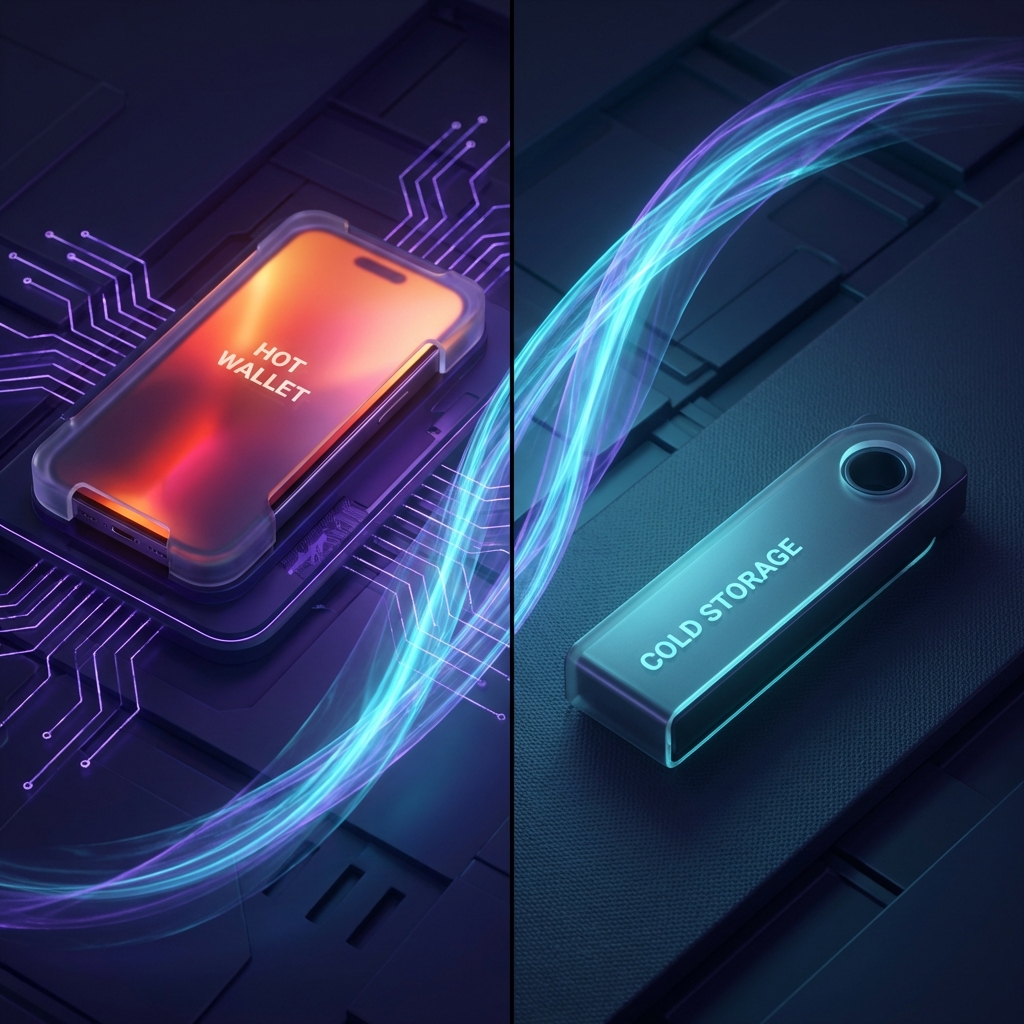
Hot vs Cold Wallets: Which Is Right for You?
Key Takeaways
- Hot wallets are connected to the internet—convenient for daily use but more vulnerable to hacks
- Cold wallets store keys offline—maximum security for long-term holdings
- Most crypto users should use both: hot for spending, cold for savings
- Keyra combines hot wallet convenience with cold-wallet-grade security features
- The 80/20 rule: Keep 80% in cold storage, 20% in hot wallets
Introduction
Choosing the right cryptocurrency wallet is one of the most important decisions you’ll make as a crypto holder. The debate between hot and cold wallets isn’t about which is better—it’s about understanding when to use each.
Think of it like money management: you keep some cash in your checking account for daily expenses, but your savings go in a secure account. The same principle applies to crypto.
What Are Hot Wallets?
Hot wallets are cryptocurrency wallets that maintain a connection to the internet. They’re called “hot” because they’re always online and ready for transactions.
Types of Hot Wallets
| Type | Examples | Best Use Case |
|---|---|---|
| Mobile Apps | Keyra, MetaMask Mobile, Trust Wallet | Daily transactions, on-the-go access |
| Desktop Apps | Exodus, Electrum, Keyra Desktop | Trading, larger transactions |
| Web Wallets | MetaMask (browser), Phantom | dApp interactions, DeFi |
| Exchange Wallets | Coinbase, Binance | Active trading (not recommended for storage) |
Pros of Hot Wallets
✅ Instant access — Send and receive crypto in seconds
✅ User-friendly — Simple interfaces for beginners
✅ dApp compatible — Connect to DeFi, NFTs, and Web3 apps
✅ Free to use — No hardware purchase required
✅ Multi-device sync — Access from phone, desktop, or browser
Cons of Hot Wallets
❌ Internet exposure — Vulnerable to online attacks
❌ Phishing risks — Fake websites can steal credentials
❌ Device dependency — Phone loss or malware can compromise funds
What Are Cold Wallets?
Cold wallets store your private keys completely offline. They’re called “cold” because they’re disconnected from the internet, making them nearly impossible to hack remotely.
Types of Cold Wallets
| Type | Examples | Best Use Case |
|---|---|---|
| Hardware Wallets | Ledger, Trezor, Keystone | Long-term storage, high-value assets |
| Paper Wallets | Printed QR codes | Gifting, archival storage |
| Air-Gapped Devices | Old phones, dedicated laptops | Maximum security setups |
| Metal Seed Storage | Cryptosteel, Billfodl | Backup for any wallet |
Pros of Cold Wallets
✅ Maximum security — Keys never touch the internet
✅ Hack-resistant — Remote attacks are impossible
✅ Physical control — You hold the actual device
✅ Long-term reliability — Designed for years of storage
Cons of Cold Wallets
❌ Upfront cost — Hardware wallets cost $50–$200+
❌ Less convenient — Extra steps for every transaction
❌ Physical risks — Can be lost, stolen, or damaged
❌ Learning curve — More complex setup process
Head-to-Head Comparison
| Feature | Hot Wallets | Cold Wallets |
|---|---|---|
| Security Level | Medium | Very High |
| Convenience | High | Low |
| Cost | Free | $50–$200+ |
| Best For | Daily use, <$1,000 | Long-term, >$1,000 |
| Hack Risk | Higher | Minimal |
| Recovery | Cloud/seed phrase | Seed phrase only |
| dApp Access | Direct | Requires connection |
When to Use Each
Use a Hot Wallet When:
- Making frequent transactions
- Interacting with DeFi protocols
- Holding smaller amounts (
<$1,000) - Needing quick access to funds
- Collecting NFTs or minting
Use a Cold Wallet When:
- Storing significant holdings (>$1,000)
- HODLing for long-term gains
- Maximum security is priority
- You won’t need frequent access
- Protecting generational wealth
The Hybrid Approach: Best of Both Worlds
Most experienced crypto users employ a hybrid strategy:
Hot Wallet (20%): Daily spending and DeFi
├── Mobile wallet for quick payments
├── Browser extension for dApps
└── Small balances only

Cold Wallet (80%): Long-term storage
├── Hardware wallet for main holdings
├── Metal backup for seed phrase
└── Only accessed when necessary
How Keyra Bridges the Gap
Keyra is designed to offer hot wallet convenience with cold-wallet-level security:
- RASP Protection — Runtime security detects compromised devices
- Biometric Lock — Face ID and fingerprint authentication
- Transaction Simulation — AI previews outcomes before signing
- Encrypted Storage — Military-grade AES-256 encryption
- Rust Core — Cryptographic operations in memory-safe Rust
While no hot wallet can match a hardware wallet’s air-gapped security, Keyra closes the gap significantly for users who need accessibility.
Making Your Decision
Ask yourself these questions:
- How much crypto do I hold? — Small amounts can stay hot; large holdings need cold storage
- How often do I transact? — Daily users need hot wallet access
- What’s my risk tolerance? — Security-focused? Lean toward cold
- Do I use DeFi? — Active DeFi users need hot wallet connectivity
- Can I afford a hardware wallet? — $100 protects potentially much more
Frequently Asked Questions
Can I use both a hot and cold wallet?
What happens if I lose my hardware wallet?
Are exchange wallets considered hot wallets?
Ready to Secure Your Future?
Join thousands of users who trust Keyra for their multi-chain self-custody.
Download Keyra Now